

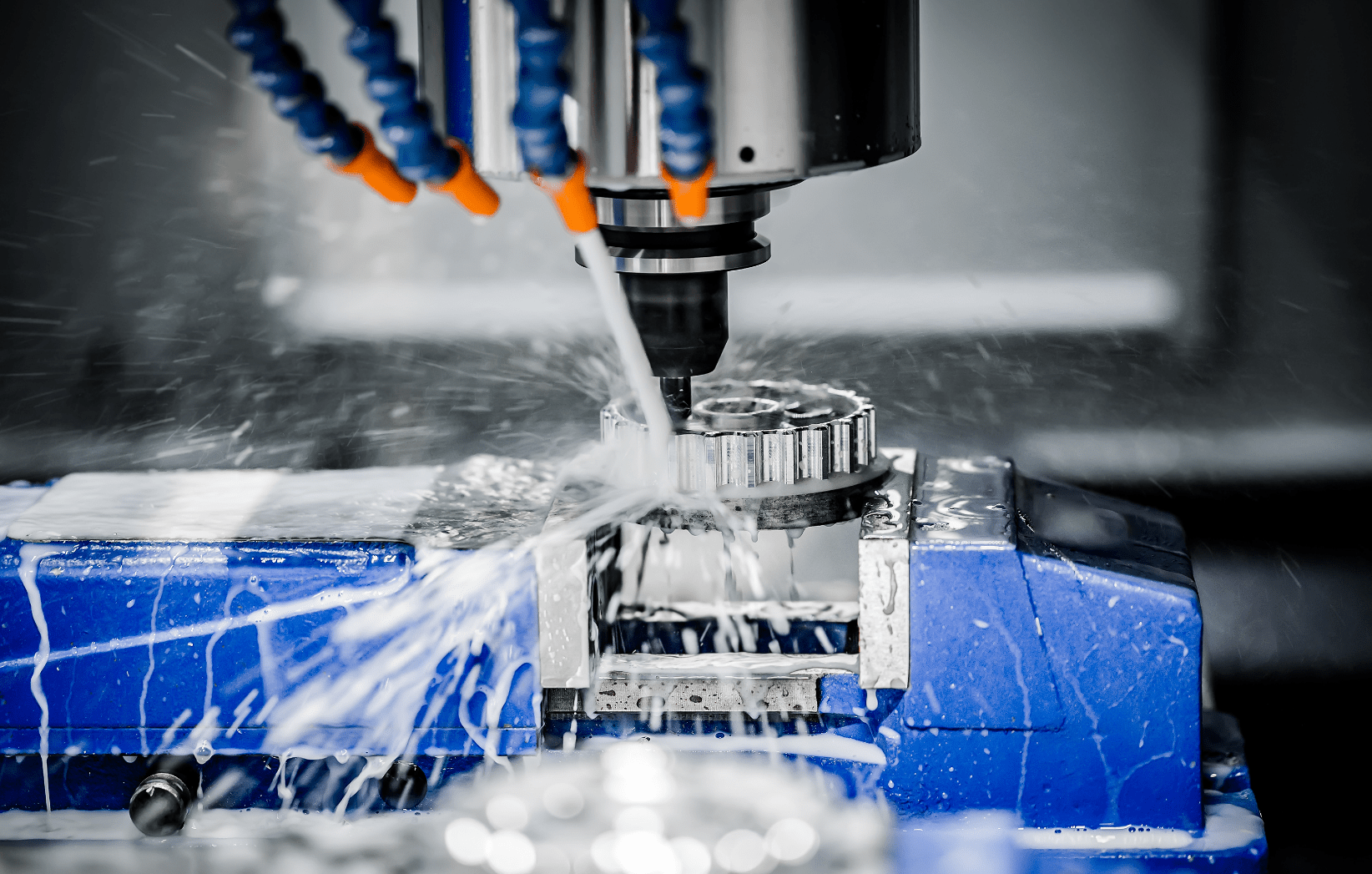
Introduction to CNC Machining Services
CNC machining uses computer software to control the movement of tools and machinery in a manufacturing setting. It provides for the creation of intricate and precise components by employing various techniques such as milling, turning, drilling, and grinding to remove material from a workpiece. The CNC Machining process is highly regarded for its efficiency, repeatability, and versatility, which allows for the fabrication of parts from a multitude of materials. It has become a fundamental technology in the aerospace, automotive, medical and consumer electronics industries.
For more in-depth information, you should view the Aluminum CNC Machining Service – ETCN
Advantages of CNC Machining Services
CNC machining provides numerous benefits compared to the older manual methods of machining. These are highlighted as follows.
Click here to read more about Aluminum CNC Machining Service in China – ETCN.
CNC machining provides unbeatable precision as it can machine tolerances to within a tenth of a micron for highly complex parts.
Reduced human error, and optimized efficiency and production time can be achieved due to the automated processes in CNC machining.
CNC machining can seamlessly move through the various stages of production, from prototyping to mass manufacturing.
The versatility of CNC machining is extended to various industries as it can be used on a wide range of materials such as metal, plastic, and even céramics.
Cost-Effectiveness: The ability to minimize waste, combined with rapid production speeds and reduced manual work, makes CNC machining a cost-effective manufacturing method.
Overview of Aluminum as a Material
Aluminum is CNC machined because of the unique properties this lightweight, corrosion-resistant metal possesses. Aluminum is easily machined, and its strength relative to weight is excellent, which is why the alloy is used for a wide range of applications. The 6061, 7075, and 2024 aluminum alloys, which are used in the CNC machining process, have high tensile strength, are durable, and are able to maintain close tolerances, which makes them ideal for machining. Aluminum is used in a range of industries (aerospace, automotive, marine, electronics) as its unfinished surface is attractive, it can be anodized, and is recyclable.
Types of Aluminum Used in CNC Machining
Aluminum Alloy 6061 and Its Uses
6061 Aluminum Alloy is one of the most CNC-machined alloys. It is corrosion-resistant, highly machinable, and has mechanical strength. It is easy to weld and fabricate, and thus preferred in structural applications. Examples of these applications are automotive parts, piping, aerospace components, and recreational equipment. Moreover, 6061 allows for anodization, which improves the surface and adds to the durability, which translates to many uses in different industries.
Characteristics of Aluminum Alloy 7075
Aluminum Alloy 7075 has the highest strength-to-weight ratio and is used in the most demanding applications in the aerospace and other heavy industries. It has Zinc as a main alloying constituent, which adds to the tensile strength and makes it fatigue resistant. 7075 has the lowest corrosion resistance of all the aluminum alloys, and anodizing it helps it. It is used in aerospace structural components, high-performance automotive parts that require high strength, and sporting equipment.
Characteristics of Aluminum Alloy 6063
Apart from being easy to extrude, Alloy 6063 also offers phenomenal finishes on extrusions. 6063 also has moderate strength, good corrosion resistance, and is aesthetically pleasing. Alloy 6063 is used in applications where precision is of utmost importance. Architectural frameworks, window, and door frames, as well as piping, make use of Alloy 6063 because it is easy to work into complex shapes and has a polished finish. Its popularity in construction and decorative use is further boosted by its weldability, anodizing, and finishing capabilities.
Understanding the CNC Machining Processes
Overview of CNC Milling Techniques
CNC milling uses computer-controlled cutting tools to remove materials from workpieces to form shapes and dimensions. CNC milling is capable of performing complex geometries while also maintaining high tolerances; multiphase CNC mills allow for 3 to 5 axes of horizontal and vertical control for intricate 3 dimensions. There are a variety of techniques centered on certain objectives, such as face milling, which is dedicated to the finishing of flat areas, contour milling, and pocket milling, which creates recesses. CNC and high-speed cutting tools have become the standard for maintaining precision and efficiency in the aerospace, automotive, and medical device industries, among others.
CNC Precision Machining Techniques
Precision CNC machining utilizes sophisticated machinery and carefully calibrated approaches to achieve outstanding accuracy and finish on surfaces. Precision CNC machining utilizes advanced techniques such as micro-milling and high-speed machining to produce parts with tolerances exceeding ±0.001 inches. Marked improvements are made to tools and materials through advanced techniques. Tools made with laser machining techniques and materials made with cryogenic cooling techniques are integrated to improve performance and broaden the range of materials the tools and techniques can be used on. This is most important when machining high-performance materials such as titanium and INCONEL® as well as hardened steels. Other applications include CNC machining of surgical instruments and semiconductor parts to be used in the aerospace industry.
5-Axis CNC Machining Explained
5-axis CNC machining embodies the highest levels of flexibility and efficiency within the machining field. Unlike conventional 3-axis configurations, 5-axis machines can move simultaneously on five different axes, allowing for more advanced machining configurations and reducing the need for multiple setups. This advantage is especially useful in the production of complex components like turbine blades, medical implants, and automotive prototypes. The extra rotating axes—the A and B or A and C axes—allow for advanced positioning and contouring that greatly enhance speed and accuracy in production. 5-axis CNC machining employs advanced software and toolpath strategies to optimize material use, reduce lead times, and guarantee the best quality in complex applications.
Custom Aluminum Parts and Their Applications
Common Applications for Custom Aluminum Parts
Aluminum is valued in many industries for its lightweight nature, corrosion resistance, and excellent machinability. In aerospace, custom aluminum parts are needed for important structural frames, brackets, and fuel system components where strength and lightweight properties are critical. Aluminum parts are also used in the automotive industry for fuel-efficient and high-performing vehicles, as engine components and lightweight chassis parts. In the medical industry, custom aluminum parts are used for surgical tools, imaging devices, and prosthetic limbs, which are for their biocompatibility and ease of sterilization. Custom aluminum parts are also used in the electronics industry for enclosures and heat sinks due to its excellent thermal conductivity and durability.
Specification of Requirements for Customized Aluminum Components
In the specification of customized parts, the most important factors that need to be outlined are the part design, material, and functional requirements. Since the design has the most impact on the performance of the part and its machinability, the dimensions, tolerances, and geometric features of the design need to be outlined. The latter should be noted as certain aluminum alloys, including 6061 and 7075, are more often selected based on their distinguished mechanical properties and compatibility to certain applications. Also, identify specified surface treatments, which may include anodizing and plating, to increase corrosion resistance, durability, and aesthetic value. Lastly, the functional requirements, which include thermal and load requirements and other operational conditions, should be explicitly outlined as they guide the manufacturer in developing the most appropriate design for the custom part.
Options for Machined Aluminum Finishings
When it comes to machined aluminum components, aluminum finishing adds both functional and aesthetic value. Surface finishing can be bead blasted, anodized, or electroless nickel plated. Depending on the desired outcome, bead blasting can give an even matte texture, while anodizing adds various colors to the aluminum and further assists in corrosion resistance. For added wear resistance and conductivity, electroless nickel plating is done. High gloss or satin finishes can be achieved by polishing or brushing. Choosing the appropriate finishing touches depends on the specific characteristics of the application, such as the environment, the expected performance, or the desired visual appeal, and various functional aspects.
Choosing an Online CNC Machining Service
Considerations in Selecting a Machine Shop
Choosing a machine shop for CNC machining is important for the success of a client’s project. One of the first considerations is what the shop can do in terms of the range of offerings, materials, and the scope of the designs. Looking at their outputs through client reviews and samples in a portfolio helps assess their quality. Furthermore, clients should check if the shop can achieve the required tolerances and finishing, since these are performance-driving attributes of the product in question. Consider the shop’s dedicated hours of work, its prices, and its willingness to entertain custom work. The presence of certifications, like ISO 9001, should not only be an indicator of professionalism but also a level of assurance in reliability.
Advantages of Online CNC Machining Services
The implementation of online CNC machining services presents various benefits in contrast to machine shops. Through online platforms, customers can complete quotations and machining orders in a simplified manner. They can obtain quotations and manufacturability assessments from online shops rapidly upon uploading a CAD file. This enhancement quickens the machining process, which is crucial during the design phase. Furthermore, many machining services possess automated machining systems, which enhance the machining process in terms of consistency, quality, precision, and repeatability. In addition to fast machining, online CNC services approximate machining services in automated systems to a larger variety of materials, textures, and dimensions, which covers a larger scope of made applications and customized pieces. As a result, online CNC machining services provide an advantageous solution in terms of machining costs and convenience.
Evaluating CNC Services for Quality and Speed
When assessing CNC services, one must consider both the quality and the speed of the service. Look for service providers who have the best and latest machinery as this has a huge impact on the precision of the work and the quality of the surface finish. Evidence of quality control measures should be present, such as control of dimensions and certification of materials, as well as quality control documents. The speed of service is deliverable when the provider can control order prioritization and tackle possible delays. Look at turnaround times for prototyping, small-batch production, and full-scale production. Finally, look for service providers who offer a full range of services, including design optimization services, to attain the desired results efficiently and effectively.
Conclusion and Future of Aluminum CNC Machining
Trends in Aluminum Machining Services
Aluminum machining services are developing due to advances in CNC machining and increased demand for precision machining. The increase in automation and robotic integration is a notable trend that improves the speed and uniformity of production. Also, there are efforts to implement machine learning and artificial intelligence in refining machining processes, including predictive maintenance, adaptive control, and toolpath optimization. Another significant trend is the pursuit of sustainability, including the adoption of energy-conserving machines and the implementation of machinery practices that reduce material waste. The demand for lightweight, yet strong, parts in the aerospace, automotive, and electronic industries continues to increase, which in turn, expands the machining of aluminum.
High-Speed Machining and the Role of CNC Technology Innovations in CNC technology have made advancements at the same rate as innovations in machining aluminum. As the machining field continues to evolve, the adoption of High-Speed Machining (HSM) becomes more widespread and achieves reduced cycle times while maintaining the quality of surface finishes. Flexibility and accuracy for complicated designs are unchallenged with the development of multi-axis CNC machines, including 5-axis and 7-axis configurations. Precision in aluminum machining is complemented by advances in tool design, including coated carbide and polycrystalline diamond (PCD) tools. The adoption of Industry 4.0 frameworks, such as real-time optimization of CNC for enhanced production efficiency and data-driven manufacturing with IoT-enabled devices, revolutionizes the production process.
End Thoughts on CNC Machining
Aluminum CNC machining is highly valued across different industries because of its scale, accuracy, and ability to deliver within quality thresholds. Its distinctive qualities of being lightweight while still retaining strength, as well as its resistance to corrosion, exceed even advanced machining technology, ensuring its CNC machining endurance. Most CNC machining technique employs market and technological changes. Finally, revision, efficiency, and sustainability promote demand and competitive intersection as advanced processes become perfected across the market. In CNC-machined aluminum, value is driven by radical CNC market processes and highly competitive market positioning. It drives competitive CNC aluminum as a positive aluminum value is derived. The allocated value of driven processes creates competitive alignment from market positioning. It drives processes and unprecedented CNC quality alignment, ensuring a positive CNC-machined aluminum value is derived.