

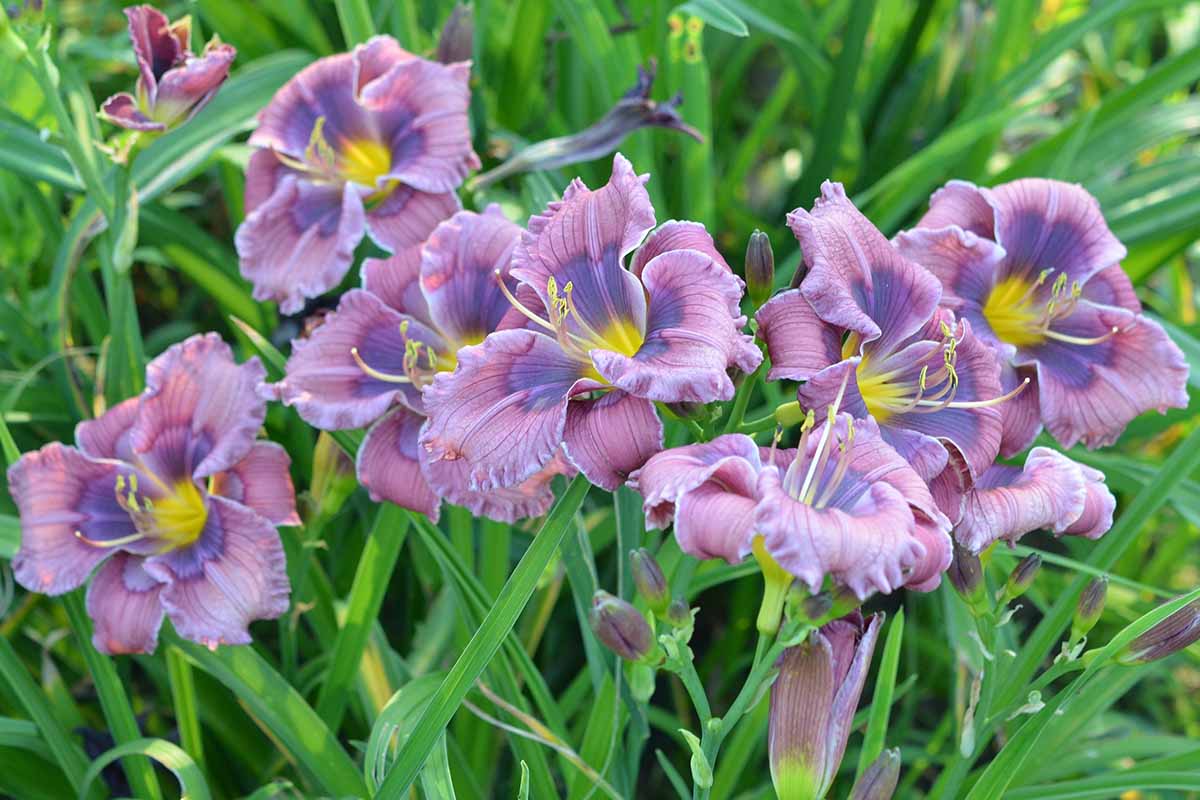
Daylilies are usually discussed in terms of reliability, long flowering, and the sheer range of colours now available. The more interesting question for many gardeners is not whether daylilies are easy to grow, but which colours help a planting feel calmer, more deliberate, and less obvious in midsummer. Lavender and blue-toned daylilies occupy that quieter end of the spectrum. They soften mixed borders, sit comfortably beside silver foliage and ornamental grasses, and can bridge the visual gap between pinks, whites, mauves and deeper purples. In a British garden, where light can shift quickly between bright sun and overcast conditions, that adaptability matters. Rather than shouting for attention, these shades often reward a second look, especially in the evening or on duller summer days when harsher colours can appear flat.
A practical starting point, according to the premier grower of daylily plants SwallowtailDaylilies, is to judge cool-toned cultivars by their garden performance first and catalogue colour second; the same advice applies when comparing lavender blue daylily plants for sale, because bud count, branching, substance and repeat bloom usually matter more than a single photograph.
This matters because no daylily is truly sky blue in the way a delphinium or gentian can appear. Growers and breeders use terms such as lavender, blue blend, blue eye, blue cast and blue-purple to describe flowers that lean cool rather than warm. Those distinctions are not just sales language. They help gardeners understand whether the flower reads as silvery lavender from a distance, whether the cooler effect sits in the eye zone, or whether the whole bloom carries a muted slate or lilac tone. Registered cultivars described by the American Daylily Society include colours such as “lavender with blue halo” and “lavender blue blend”, which shows that the “blue” impression in daylilies is generally a matter of tone, overlay and contrast rather than pure pigment.
For that reason, these cultivars suit gardeners who are prepared to look beyond novelty. In a planting scheme, they can act almost like a neutral. They pair well with salvias, nepetas, hardy geraniums, stachys, artemisia and pale roses, but they can also take the edge off stronger oranges and yellows nearby by cooling the overall composition. The result is less about rarity and more about control. A border that includes cool lavender daylilies often feels longer in season and more coherent because the flowers do not fight every neighbouring plant for dominance.
What “Blue-Toned” Really Means in a Daylily
The first useful thing to understand is that flower colour is partly botanical fact and partly human perception. In flowering plants, red, purple and blue effects are commonly linked to anthocyanin pigments, while the final visible colour also depends on cell conditions and other compounds in the petal. In practical garden terms, this means a cultivar may appear more lavender, more mauve or more blue-grey depending on light, temperature, petal substance and the colours planted around it. That is why one photograph can never tell the full story. A daylily advertised as blue-toned may read distinctly cool in morning light and more pink-lilac by late afternoon.
In daylilies, the blue effect often comes from contrast. A cool eye zone around a green throat can make the whole flower appear bluer. Heavy substance or a slightly waxed surface can also hold colour well enough to preserve that impression across the day. Conversely, thin-petalled cultivars or those grown in scorching conditions may lose clarity and slip toward pink or faded purple. This is one reason experienced growers pay close attention to flower form and texture, not only to the colour description. A flatter, broad flower can show the eye zone more clearly, while a ruffled edge may catch light differently and alter how cool the flower appears from a distance.
Gardeners sometimes assume that soil chemistry will transform a daylily’s colour in the same way it can influence hydrangeas. That is not a reliable expectation. Daylily colour is fundamentally genetic, and while weather and site conditions can influence the appearance of a bloom, changing the soil pH is not a realistic route to turning a lavender cultivar blue. The better approach is to choose cultivars already known for cool-toned flowers and then grow them in conditions that minimise stress. Good light, steady moisture in active growth, and a position without severe reflected heat all help blooms show their best character.
This is also why naming matters. Terms such as “lavender self”, “lavender with darker eyezone”, “lavender blue blend” and “lavender with blue halo” tell you where the cool tone sits. For a gardener designing a border, that is more useful than a vague promise of unusual colour. It tells you whether the flower will read as a quiet field of tone or as a patterned bloom with a distinct centre. In a mixed ornamental garden, that difference shapes the entire effect.
Choosing Cultivars for a British-Style Border
A sensible selection process starts with habit rather than glamour. Height, flowering season, branching, bud count and repeat performance determine whether a cultivar earns its place after the first flush. In a British-style mixed border, where a daylily has to work among shrubs, grasses and other herbaceous perennials, a well-shaped clump and consistent scapes are often more valuable than an unusually dramatic flower. The Royal Horticultural Society notes that daylilies thrive in sun or partial shade, prefer fertile, free-draining but moisture-retentive soil, and flower more prolifically in full sun. That makes them adaptable, but it also means placement affects results. A cool-toned cultivar that is supposed to look refined can become disappointing if it is too shaded to bloom well or too dry to hold flowers properly.
For design purposes, medium heights are often easiest to use. They weave into the centre of a border without hiding neighbours or leaving bare scapes visible from the front. Taller selections can be excellent toward the back, especially if their flowers are broad enough to register above grasses or airy perennials. Dwarf forms have their place near paths, in smaller town gardens or in restrained contemporary planting, but the cool shades often show best where the flowers are near eye level and can be seen against a settled background rather than open sky. Background colour matters more than many buyers realise. Pale walls may wash out a subtle bloom, while dark yew, beech, fencing or evergreen shrubs can make lavender and blue-toned flowers appear more distinct. Extension guidance on daylily use similarly stresses relating flower colour and scape height to the background and the wider planting context.
Bloom season deserves equal attention. A collection of early, midseason and reblooming cultivars extends usefulness well beyond a short display. Some registered lavender-blue cultivars are noted as early or early-midseason, while others offer extended or reblooming performance. For a home gardener, that can matter more than a tiny difference in hue. A flower that repeats and keeps a neat clump will contribute to the garden for longer than a famous cultivar that peaks briefly and disappears into untidy foliage. When comparing plants, ask not only what the bloom looks like, but when it starts, whether it repeats, and how the foliage behaves after flowering.
Growing Conditions That Preserve Cool Colour
Daylilies are forgiving, but subtle colours show best when plants are not under avoidable stress. The basic advice is straightforward: full sun to light partial shade, fertile soil, decent drainage, and enough moisture during the main growing and flowering period. The RHS states that hemerocallis perform best in full sun but can cope with partial shade, while poor flowering is more likely in heavy shade. It also notes that plants dislike waterlogging and may stop flowering in drought. For cooler-toned daylilies, those points are especially relevant because a stressed plant not only flowers less well but can produce blooms that are smaller, weaker in substance and less clear in colour.
Organic matter helps in two ways. It improves moisture retention in lighter soils and improves structure in heavier ones, creating the even growing conditions daylilies prefer. Deep watering in dry spells is better than frequent shallow sprinkling, which encourages surface rooting and does little for long-term resilience. Missouri Botanical Garden guidance notes that daylilies appreciate deep watering in dry conditions and perform best in average, medium-moisture, well-drained soils. That is plain advice, but it has a visual consequence: flowers hold form better and foliage stays presentable for longer. In ornamental planting, attractive leaves are part of the display, especially after the first flowers have passed.
Sunlight is a balancing act. More light generally means more flowers, yet the RHS also notes that some richer colours can become bleached in scorching sun. Cool lavender and blue-toned flowers can similarly shift in strong heat, becoming less crisp or less obviously blue. In hotter or more exposed gardens, light afternoon shade can therefore be useful, not because daylilies need coddling, but because it can preserve bloom quality. In much of Britain, however, ordinary open exposure is still suitable, especially where the planting is not backed by reflective paving or a south-facing wall that traps heat.
Feeding should be moderate rather than enthusiastic. Daylilies are not hungry bedding plants. Excessive nitrogen can produce lush growth at the expense of flowers, while average garden soils often need little more than reasonable fertility and an annual mulch. Once clumps become crowded, division restores vigour. The RHS recommends division in early spring or early autumn, and extension guidance commonly suggests periodic division to maintain performance. For gardeners chasing the cleanest colour and strongest repeat, that routine maintenance is often more effective than buying additives or “colour boosters”.
Using These Daylilies in Ornamental Design
The best use of cool-toned daylilies is strategic. They are not usually the stars of a hot border, but they can be indispensable in gardens that aim for transition, contrast and relief. Their flowers sit well with blue and silver planting without becoming monotonous, because the daylily form itself adds a broader, more architectural note than catmint or salvia. At the same time, they can break up pastel schemes that would otherwise feel soft to the point of vagueness. A lavender-blue daylily placed among white astrantias, dusky hardy geraniums and upright grasses provides shape and rhythm as much as colour.
These shades also work exceptionally well where foliage is doing half the design work. Blue-toned blooms above grey or glaucous leaves create a composed effect without forcing the issue. Plants such as artemisia, hostas with blue-green foliage, stachys, some euphorbias and finer grasses all make useful companions. The key is not to match every flower to the daylily, but to ensure the surrounding leaves and forms help the bloom read as cool and controlled. Nearby oranges, if used carefully, can be effective too. A restrained warm accent often makes the lavender tones feel cleaner rather than busier. This mirrors broader perennial design advice: colour succeeds when supported by texture, scale and seasonal layering, not when treated in isolation.
Spacing is another overlooked design issue. Daylilies eventually make substantial clumps, and a subtle flower loses elegance if it is jammed between dominant neighbours. Give plants enough room that the arching foliage can be seen and the scapes rise clearly. This is particularly important in more contemporary gardens, where repeated clumps create order. In informal cottage-style planting, the same principle still applies, but the effect is looser: cool-toned daylilies can thread through a border and provide moments of calm amid busier flowering sequences. They are also suitable for larger containers, provided drainage is good and watering is consistent, although in pots the flowers may need more attention in dry weather.
Because each flower lasts a day, plantings should rely on succession rather than any single bloom. Good bud count and multiple scapes create continuity, and that is where experienced growers usually separate the truly worthwhile cultivars from the merely photogenic ones. In other words, the most successful blue-toned daylily in a border is rarely the one with the most dramatic catalogue image. It is the one that opens well, repeats reliably, and sits comfortably with everything around it.
Common Mistakes and a Better Buying Mindset
The biggest mistake is buying by colour description alone. Cool-toned daylilies tempt gardeners because they sound unusual, but unusual is not the same as useful. A cultivar with poor branching, weak increase or muddy colour in ordinary weather will not improve because the label says blue. The more dependable approach is to weigh colour against proven garden qualities. Look for clear descriptions of bloom season, plant height, foliage habit, bud count, substance and rebloom, then consider whether those traits fit your site. The American Daylily Society’s guidance on cold-hardiness is also worth bearing in mind: foliage habit does not, by itself, determine whether a cultivar will succeed in a given climate. The safest route is to choose cultivars already known to perform well under conditions similar to your own.
A second mistake is ignoring foliage after flowering. Daylilies are long-lived clump formers, and the leaves remain part of the border for months. Healthy foliage should therefore be treated as a design feature, not an afterthought. Good siting, division when needed, and sensible watering all help. Watch too for disease issues such as rust and crown problems, especially where plants are stressed or air circulation is poor. Rust symptoms include yellow to brown streaks and spotting on leaves, which can seriously spoil the appearance of a planting even when flowering has been good. Buying clean stock and avoiding overcrowding are basic but effective precautions.
Finally, gardeners sometimes expect a cool-toned daylily to behave like a precious rarity. In reality, its value lies in how usefully it behaves as a perennial. The best lavender and blue-toned selections are not gimmicks. They are practical plants for gardeners who want midsummer colour with restraint, enough individuality to reward close viewing, and enough toughness to hold a mixed border together. Seen in that light, these daylilies are less about chasing the impossible dream of a true blue bloom and more about understanding nuance. That is where the real grower insight sits: in recognising that subtle colour is only convincing when matched by sound plant performance.