

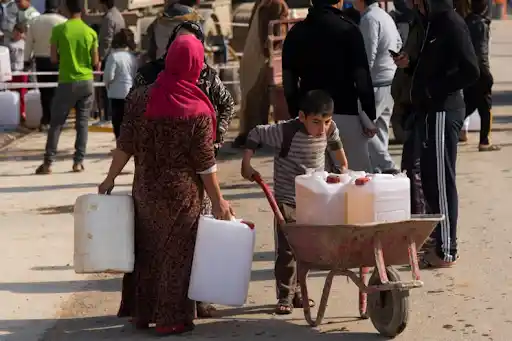
Imagine a classroom once filled with laughter, now silent beneath a broken roof and shattered windows. Desks lie scattered, chalkboards cracked, and the echoes of children’s voices have been replaced by uncertainty. Children who should be solving math problems or reading stories are instead gathering fuelwood, helping their families survive, or working small jobs to support their households. In communities affected by conflict, education can quickly become a distant dream.
Yet when children are given the chance to return to learning, even in temporary classrooms or community centres, their futures begin to shift. Education restores routine, stability, and a sense of possibility.
Research from the World Bank shows that each additional year of schooling can increase a person’s future income by 8–10% on average in developing contexts. This demonstrates the powerful impact of education on poverty, particularly in regions trying to rebuild after conflict.
For those who support humanitarian initiatives, understanding this connection helps show why supporting charity organizations in Canada can transform the lives of children growing up in war-affected communities.
How Conflict Perpetuates Poverty?
War disrupts far more than buildings and infrastructure; it destabilizes the systems that allow communities to grow and thrive.
Families may lose homes, farmland, or businesses. Schools are often destroyed, damaged, or forced to close, leaving children without access to education for months or even years.
Without learning opportunities, many children face limited options. Some are forced into informal labour to support their families. Others simply miss critical years of development that shape their future skills and opportunities.
Over time, this creates a dangerous cycle. Children who grow up without education often struggle to access stable employment as adults. As a result, poverty persists across generations, making recovery for entire communities far more difficult.
Breaking this cycle requires more than rebuilding homes, it requires rebuilding access to education.
Education as a Pathway Out of Poverty
Education equips children with knowledge, skills, and confidence to pursue opportunities. In conflict zones, schooling can:
- Provide practical skills: literacy, numeracy, and vocational training open doors to jobs.
- Boost lifetime earning potential: educated youth are far more likely to earn a stable income.
- Foster entrepreneurship: youth can start businesses, rebuild communities, and create local jobs.
- Strengthen communities: educated children mentor peers, restore social cohesion, and become local leaders.
The impact of education on poverty is clear: investing in learning today creates resilient communities tomorrow.
The Role of Canadian Charity Organizations
Canadian charities are vital in funding and supporting education in war-affected areas. Through partnerships with local communities, they:
- Rebuild schools and classrooms.
- Train teachers to deliver quality education.
- Supply learning materials and technology.
- Establish safe spaces for learning and psychosocial recovery.
Organizations like War Child Canada, Plan International Canada, and World Vision Canada ensure education programs are accessible, sustainable, and impactful. By supporting charity organizations in Canada, donors directly enable children to gain skills, confidence, and hope.
How Does Your Support Make a Difference?
Education programs require classrooms, trained educators, materials, and psychosocial support. By supporting Canadian charities:
- Children gain safe, quality education.
- Skills are developed to improve future economic opportunities.
- Families and communities are empowered to rebuild sustainably.
- Cycles of poverty are disrupted for future generations.
Your contribution is more than a donation; it’s an investment in a child’s future. By supporting these initiatives, Canadians help children regain stability, hope, and the tools to thrive.
Long-Term Benefits of Education in Conflict Zones
When children gain access to education, the benefits extend far beyond individual success.
Communities with stronger education systems experience:
- Greater economic stability and job opportunities
- Stronger leadership and local governance
- Improved social cohesion and resilience
- Reduced long-term poverty across generations
These outcomes demonstrate the long-term impact of education on poverty, particularly in communities rebuilding after conflict.
Closing Thoughts
Conflict can destroy homes, schools, and the sense of stability children depend on. But education has the power to rebuild opportunity and restore hope.
For Canadians looking to make a meaningful difference, supporting charity organizations in Canada helps ensure that children affected by war have the chance to return to the classroom.
Every lesson learned, every book opened, and every classroom rebuilt becomes a step toward breaking the cycle of poverty. By investing in education today, you can help children reclaim their futures and build stronger communities for generations to come.



