

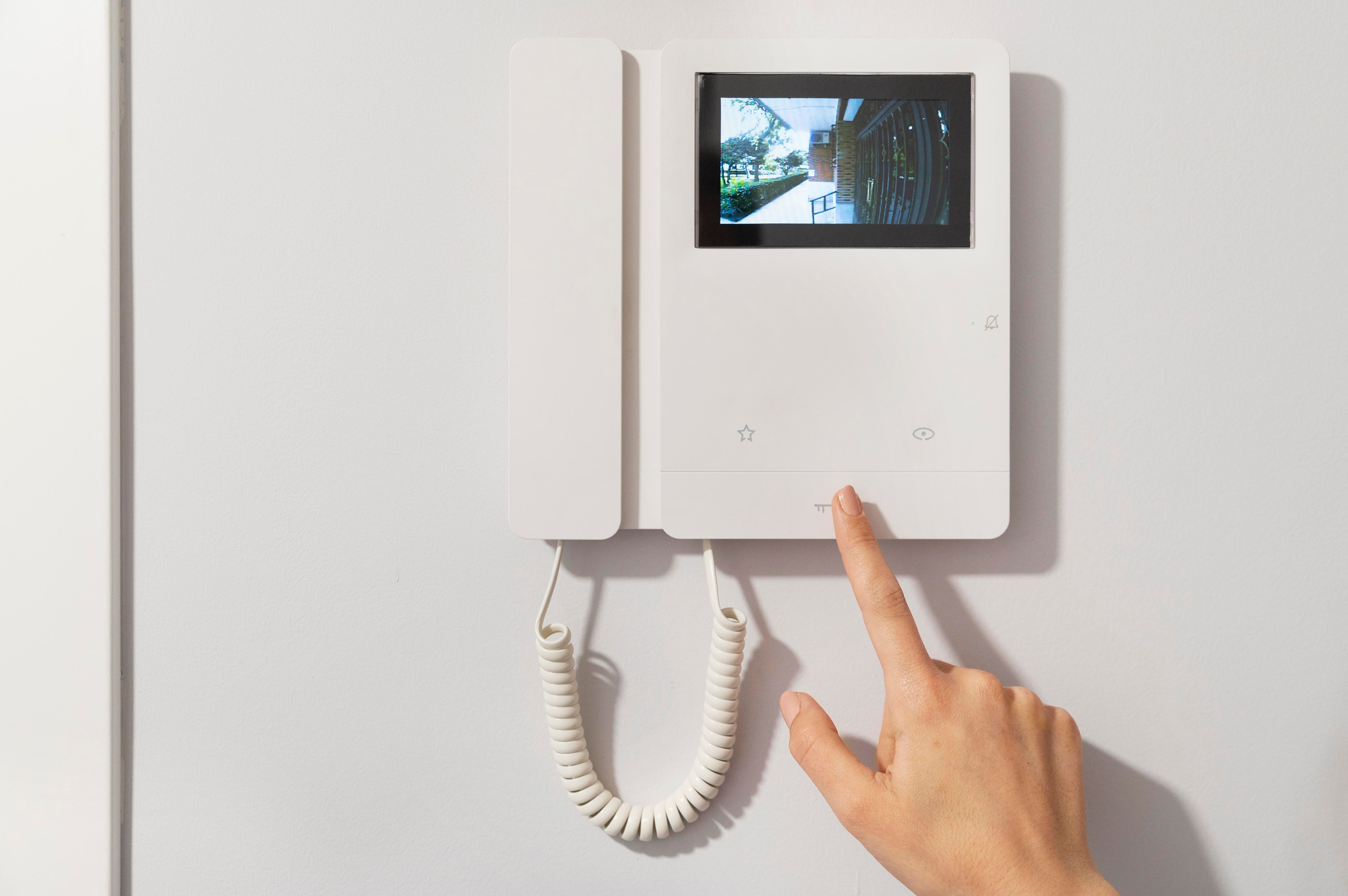
Strategic video intercom systems in commercial spaces work by combining real-time, two-way audio-visual communication with centralised access control. To manage fear of theft, intrusion, unauthorised access, managing visitors, and missed deliveries, video intercom systems are better installed in commercial spaces.
Key Takeaways:
- Implementing a video intercom system creates a unified security ecosystem by integrating high-definition visual verification and cloud-based access control
- Commercial entities effectively mitigate risks ranging from unauthorised tailgating to missed logistical deliveries
- Strategic intercom deployment in a multi-tenant office or securing a high-risk industrial site ensures security with operational efficiency
Commercial spaces opt for a video intercom system for visitor initiation, two-way interaction, along with enhanced security and deterrence to tailgating.
This blog will highlight the way the video intercom systems for businesses work, with its potential benefits to the building and industrial sites.
How Does a Video Intercom System Work in Commercial Spaces?
A video intercom system is a PoE or Wi-Fi-based system that acts as a secure, two-way communication solution, aids in access control, and helps users to communicate with visitors at an entrance before granting them entry.
Here are some of the ways a video intercom system operates in commercial spaces:
1. Secure Visitor Management
The IP-based Intercom camera captures live audio and video, giving the insiders a live visual through indoor receiving units or a connected app. This system may act as a deterrent to potential vandalism or intrusion.
Office staff can verify and identify the visitors at the entrance through live video and two-way audio. This reduces unauthorised access.
2. Control Of Remote Entry
Employees inside can unlock doors from their smartphone or computer, as the system sends a signal to the electric door lock, relaying to unlock the door. This eliminates the need to physically go to the door, being beneficial for multi-tenant offices, large facilities, or off-site management.
3. Delivery Management
Employees inside may verify the couriers or any service delivery by providing temporary access or opening a secondary, secure entrance for deliveries. This maintains safety, operational efficiency, and reduces tailgating in the office space.
4. Integration With CCTV Systems
Many video intercom systems provide continuous and high-definition recording after integration with CCTV systems. It logs the event, records the time and date of the visit, and offers motion detection to capture footage of any activity at the door, acting as a security camera to capture footage of visitors.
5. Multi-Tenant or Staff Directories
The system can be scaled from a single door to hundreds of doors in multi-tenant high-rises. In commercial spaces, visitors can select a specific company or employee from the lobby directory, directly contacting the phone or desktop terminal of the person.
6. After-Hours Access Control
These systems can be programmed to lock doors automatically after working hours. In this aspect, the employees for the building/commercial space are required to use RFID cards, PINs, or QR codes to enter, monitored by the intercom.
7. Emergency Communication with Parking and Gate Management
Video intercom systems for businesses serve as emergency points in parking garages/in large campuses, allowing individuals to quickly connect with the office security desk as a readily available communication tool for help.
8. Cloud-Based Administration
The modern IP system allows administrators to manage user access, change settings, and view logs remotely through a cloud-based dashboard. Use of ONVIF-compliant video intercoms is done, allowing interoperability, bi-directional audio, imaging management, and motion alerts. This is ideal for multi-tenant properties or office space.
9. Elevator Integration
Modern systems connect to elevator systems. This allows visitors to only access the authorised floors. As a result, security for multi-story buildings increases.
Video Intercom System: Common Use Cases for Commercial Spaces
Video intercom systems are used in various commercial spaces, some are-
- Office buildings for reduced risk of unauthorised entry
- Unstaffed receptions, as a virtual receptionist, allow employees to communicate with visitors from their desks/connected devices
- Multi-tenant building management with lobby directories and security checkpoints
- Logistics and warehouse management for the identification of delivery drivers and reducing the need for manual checks
- Securing high-risk or restricted areas, such as laboratories, data centres, or administrative areas, and allowing entry to visitors only after visual confirmation
- Parking areas and in-between different floors/departments, giving quick, two-way communication
Key intercom requirements-
- Buttons in the intercom system must be operable with one hand
- Control, buttons, and communication components must be within reach range for users in wheelchairs, that is, a maximum of 48 inches from the ground, based on ADA (Americans with Disabilities Act) requirements
- Intercoms with Braille labels and visual indicators, giving enhanced accessibility for visually impaired and hearing-impaired people
- An intercom system more than 4 inches must be mounted at a height that allows detection by the visually impaired
Manage Tailgating and Secure Your Entrance Now
You might need to install this technology throughout areas like reception areas, the main entrance, and sensitive departments. Contact the best security system providers in your area, install a Video Intercom System now!