

Key Takeaways
- Waterfront homes on Long Beach Island should be evaluated as coastal properties, not only as houses with attractive views.
- Flood exposure, elevation, drainage, insurance, and prior repairs can materially affect ownership costs.
- Oceanfront, bayfront, and lagoonfront settings offer distinct considerations for access, exposure, maintenance, and lifestyle.
- Docks, boat lifts, bulkheads, easements, and water access rights deserve their own due diligence.
- Insurance quotes, inspections, permits, and surveys should be reviewed before a buyer removes contingencies.
Buying waterfront property on Long Beach Island is about far more than bedrooms, finishes, and the quality of the sunset. A home can be beautifully designed and still require careful review of its elevation, exterior materials, shoreline improvements, insurance profile, and ability to handle wind, rain, salt air, and seasonal vacancy.
Buyers comparing Long Beach Island, NJ homes for sale can use Beach House Group | SERHANT.’s waterfront property page to compare oceanfront, bayfront, and lagoon opportunities across areas including Ship Bottom, Surf City, Harvey Cedars, Long Beach Township, Barnegat Light, and Beach Haven. As a local team focused on waterfront real estate, Beach House Group | SERHANT. provides a useful starting point for understanding the property types and coastal features that can shape a purchase decision.
Start With How You Plan To Use The Home
A waterfront home should match your living needs, not just vacation plans. A full-time home needs reliable year-round access, storage, heating, nearby services, and practical layouts. A summer retreat values outdoor showers, guest space, proximity to the beach, and easy access. A boating home depends on dockage, depth, bridge clearance, and route to open water.
Before touring, consider if the property is for primary living, a second home, rental, retirement, or a mix. Think about how many will stay, parking during peak seasons, and home monitoring when vacant. If renting, check local rules and create a cautious budget not relying on future bookings.
Compare The Waterfront Setting, Not Just The Address
Oceanfront Homes
Oceanfront homes can offer direct beach access, open Atlantic views, and immediate connection to the shoreline. They can also face greater exposure to wind, blowing sand, salt spray, and easterly weather. Ask how dune access is handled, whether there are easements or restrictions affecting the lot, and how exterior components have been maintained.
Bayfront Homes
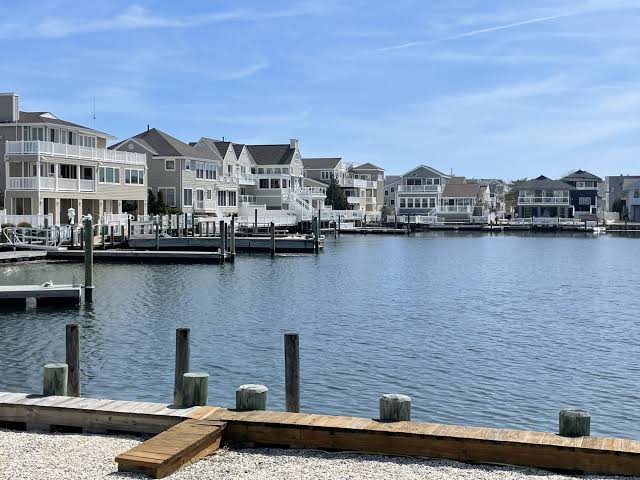
Bayfront homes may offer broad views across Barnegat Bay, sunset exposure, and convenient access for boating or paddling. Buyers should still look closely at bulkheads, docks, low-tide water depth, and the condition of waterfront decking or railings. A bayfront view is valuable, but the water-side improvements may carry significant future repair or replacement costs.
Photorealistic candid documentary-style photo of a couple in casual clothes inspecting the dock and bulkhead behind a Long Beach Island waterfront home, with the bay, boats, and weathered coastal details visible in natural, slightly overcast light; unposed lifestyle moment, realistic imperfections, no text or staged elements.
Lagoon-Front Homes
Lagoon-front properties can provide more protected dockage and a neighborhood-oriented boating lifestyle. However, access varies from one lagoon to another. Confirm the depth at low tide, review bridge clearance on the route to the bay, and consider the size and type of vessel you expect to use. A private dock does not automatically mean that every boat can easily reach open water.
Review Flood Exposure, Elevation, And Drainage
Flood-zone information is an important starting point, but it is not a complete risk assessment. Buyers should evaluate the finished floor elevation, foundation type, enclosed lower-level areas, flood vents, mechanical equipment placement, site drainage, and any history of water intrusion. Ask the seller for available elevation certificates, flood insurance information, records of prior repairs, and permits for additions or substantial renovations.
The FEMA Flood Map Service Center allows buyers to review flood hazard mapping by address, but the results should be discussed with qualified insurance and inspection professionals. Maps do not replace a property-specific review of how the structure was built, maintained, and insured.
Get Real Insurance Numbers Before You Commit
Insurance should be part of the pre-offer process, not an afterthought after contract signing. Request written estimates for homeowners’ coverage and flood insurance using the exact property address. Ask about wind or hurricane deductibles, coverage limits for detached structures and waterfront improvements, replacement-cost terms, exclusions, and whether the insurer requires any upgrades or inspections.
Local preparedness information also matters. Long Beach Township’s flood awareness guidance addresses flood hazards, hurricane preparedness, and flood insurance considerations that are especially relevant to coastal ownership. Even when a home has been maintained carefully, buyers should budget for storm preparation, post-storm inspections, and periodic policy changes.
Inspect For Coastal Wear And Deferred Maintenance
Salt air and wind-driven rain can accelerate wear on exterior materials and mechanical systems. Choose an inspector who understands coastal construction, and consider specialists when the inspection identifies concerns. Review the roof, flashing, siding, windows, doors, decks, stairs, railings, outdoor showers, HVAC equipment, electrical panels, generators, and plumbing fixtures.
Pay close attention to corrosion, soft wood, loose fasteners, peeling coatings, stained ceilings, drainage problems, and signs of moisture in lower-level storage or utility spaces. Ask whether major components have been replaced, when the work was completed, and whether permits or warranties are available.
Examine Docks, Bulkheads, And Water Access Separately
A dock, boat lift, or bulkhead can be one of a waterfront property’s most useful features, but it should be evaluated as its own asset. Verify exactly what is included in the sale, whether the improvements are permitted, and who is responsible for shared structures or access areas. A marine contractor or structural professional may be appropriate when the condition of a bulkhead, pilings, dock framing, or lift is unclear.
- Request records showing the age and repair history of the bulkhead or seawall.
- Confirm dock permits, shared-use agreements, and relevant easements.
- Check the boat lift’s condition, electrical connections, and weight capacity.
- Review water depth at low tide and bridge clearance to open water.
- Ask an attorney or surveyor to help review riparian rights and access responsibilities.
Check Municipal Rules And Build A Complete Ownership Budget
Rules vary across Beach Haven, Long Beach Township, Surf City, Ship Bottom, Harvey Cedars, and Barnegat Light. Before buying, check zoning, setbacks, dune rules, permits, rental policies, and flood standards with local officials and experts. Assess total ownership costs, including insurance, utilities, upkeep, HVAC, deck, cleaning, landscaping, storm prep, security, rental management, and future waterfront repairs. Major projects like bulkhead replacements are for long-term planning.
A Simple Pre-Offer Checklist
- Define the home’s primary use and expected occupancy.
- Compare the practical differences between oceanfront, bayfront, and lagoon-front locations.
- Review flood maps, elevation details, drainage, and prior water-related repairs.
- Obtain address-specific homeowners and flood insurance estimates.
- Schedule a coastal-experienced home inspection.
- Inspect or evaluate docks, lifts, bulkheads, and waterfront access.
- Review surveys, permits, easements, and local restrictions.
- Use contract timelines that allow enough time for insurance and inspection review.
Conclusion
A Long Beach Island waterfront home can offer an exceptional setting for beach days, boating, family gatherings, and year-round coastal living. The best purchase decisions come from looking beyond the view and understanding the practical responsibilities attached to the shoreline. When buyers investigate construction, flood exposure, insurance, water access, permits, and long-term maintenance early, they are better positioned to choose a property that fits both their lifestyle and their budget.