

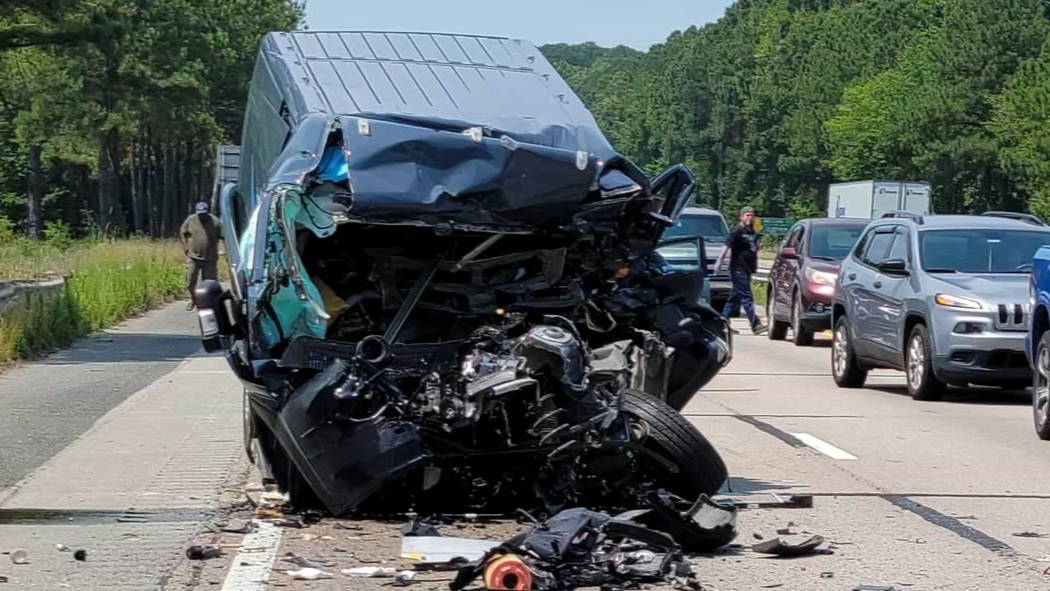
If you live in Northeastern Pennsylvania, you’ve seen it. The constant flow of Amazon, FedEx, and UPS vans has become a permanent feature of our roads, especially along major corridors like I-81. The convenience of next-day delivery is undeniable, but it comes at a cost—a significant and rising risk of traffic accidents.
The job itself is inherently dangerous. According to the Bureau of Labor Statistics, delivery drivers face a nonfatal occupational injury rate of 233.0 cases per 10,000 full-time workers, a statistic that highlights the pressures that can easily translate into dangers for everyone else on the road. When one of these accidents happens, the aftermath can be confusing and overwhelming. This article will break down the complex question of liability to help you understand who is legally responsible when a delivery driver causes a crash.
Key Takeaways
- A delivery company’s liability often depends on whether the driver is classified as a direct employee or an independent contractor.
- The legal doctrine of “respondeat superior,” or vicarious liability, can make employers responsible for the negligent actions of their employees while on the job.
- Beyond the driver and their company, other parties like vehicle manufacturers or third-party maintenance providers could also be held liable for an accident.
- Gathering specific evidence at the accident scene, such as photos of company logos and driver information, is crucial for building a strong claim for compensation.
The Rise in Commercial Vehicle Accidents
The explosion of e-commerce has fundamentally changed our roadways. The relentless demand for rapid delivery has flooded our streets and highways with commercial vehicles, dramatically increasing the likelihood of collisions with passenger cars. This isn’t just a local observation; it’s a national trend with severe consequences.
Federal data highlights the growing danger. According to the Federal Motor Carrier Safety Administration (FMCSA), thousands of large trucks and commercial vehicles are involved in fatal crashes each year, a figure that has been trending upward. For drivers in the Scranton and Wilkes-Barre area, this national statistic feels very real as they navigate the increasingly congested traffic on I-81 and other local routes.
When an Accident Turns Tragic
Due to their size and weight, collisions with commercial delivery vans can result in catastrophic injuries or death. The pressure for speed and efficiency, dictated by corporate policies, can lead to driver negligence with devastating consequences for other motorists and their families.
In the most tragic cases, a collision can result in a fatality, leaving families to navigate immense grief and financial uncertainty. To secure justice and protect your family’s future, it is important to consult a wrongful death lawyer who can provide guidance, investigate liability, and help pursue the compensation your loved ones deserve.
Who Is Legally Responsible for a Delivery Driver Crash?
When a delivery van causes an accident, the most pressing question for victims is: who pays for the damage? The answer is often more complicated than it seems and hinges on specific legal principles that define the relationship between the driver and the company they work for.
The General Rule: Vicarious Liability (“Respondeat Superior”)
The foundational legal concept in these cases is known as “respondeat superior,” a Latin phrase that means “let the master answer.” This doctrine, also called vicarious liability, holds an employer legally responsible for the negligent or wrongful actions of their employee.
The logic behind this rule is straightforward. The employee was acting on the company’s behalf, furthering its business interests, and generating profit for the company at the time of the incident. For this rule to apply, the employee must have been acting within the “scope of their employment.”
For example, if a salaried UPS driver on a scheduled route runs a red light and causes a crash, UPS is generally liable for the resulting damages. However, if that same driver took the company van on a personal errand after their shift ended, the company might argue they are not responsible.
The Critical Complication: Employee vs. Independent Contractor
Here is where liability becomes complex. To shield themselves from vicarious liability and reduce costs, many large delivery companies classify their drivers not as employees but as independent contractors. This distinction is the single most important factor in determining who can be held responsible.
A court will look at several factors to determine a driver’s true employment status, regardless of what their contract says. The primary factor is control. The more control a company exerts over how a driver does their work, the more likely they are to be considered an employee.
| Feature | Employee | Independent Contractor |
|---|---|---|
| Control | Company sets schedule, route, and methods. | Driver has significant control over their schedule and work. |
| Vehicle/Tools | Company typically provides the vehicle and equipment. | Driver often uses their own vehicle and tools. |
| Payment | Receives a regular wage or salary. | Paid per delivery, per job, or on a contract basis. |
| Training | Receives detailed training from the company. | Generally uses their own expertise; minimal training provided. |
| Exclusivity | Usually works exclusively for one company. | Can work for multiple companies simultaneously. |
So, how can you tell the difference at the scene of an accident? Often, you can’t. This is a legally complex issue that requires a thorough investigation into company contracts, operational manuals, and the degree of control the corporation exercises over its drivers.
How Companies Like Amazon and FedEx Navigate Liability
The largest players in the delivery industry have built their business models around these legal distinctions.
Amazon, for instance, relies heavily on a network of “Delivery Service Partners” (DSPs). These are technically separate small businesses that lease Amazon-branded vans and hire their own drivers. Amazon also uses “Flex” drivers who use their personal vehicles, classifying them as independent contractors. This structure is designed to create a legal buffer between Amazon and the drivers on the road.
However, this classification isn’t absolute. If an investigation shows that Amazon exerted excessive control over a DSP’s operations or a Flex driver’s routes and performance, a court may still find the parent company liable. Major carriers like UPS and FedEx often use a mix of direct employees (who typically drive company-branded brown or purple-and-orange trucks) and contractors, making each accident case unique. This strategy is ultimately about corporate responsibility.
Amazon has a duty to ensure its delivery demands do not compromise public safety. The cost of convenience for corporations cannot sacrifice accountability for people’s safety.
Common Causes and Broader Liability
Understanding who is liable also requires looking at why the accident happened. The root causes often point back to systemic issues and can even implicate parties beyond the driver and the delivery company.
Why These Accidents Happen: Pressure, Distraction, and Fatigue
Many delivery driver accidents are not simply isolated moments of carelessness. They are often predictable outcomes of a high-pressure system.
Tight delivery schedules and aggressive performance metrics force drivers to speed, make unsafe lane changes, and take other risks to avoid being penalized. Other common causes include distracted driving, as drivers are constantly interacting with GPS devices and delivery scanners. Driver fatigue from long hours behind the wheel is another significant factor that impairs judgment and reaction time.
Looking Beyond the Driver: Other Potentially Liable Parties
A thorough investigation may reveal that other entities share the blame for a collision. Liability is not always limited to the driver and their company. Other potentially responsible parties include:
- Vehicle or Parts Manufacturer: If the accident was caused by a vehicle component failure, such as faulty brakes, a defective tire, or a steering malfunction, the manufacturer could be held liable through a product liability claim.
- Third-Party Maintenance Company: Many large delivery fleets outsource their vehicle maintenance. If a mechanic’s negligence, like failing to properly service the brakes, contributed to the crash, that maintenance company could be at fault.
- Cargo Loading Company: If cargo was improperly loaded or secured inside the van, it could shift during transit, causing the driver to lose control. The company responsible for loading the vehicle could share liability in this scenario.
Identifying all potential sources of liability is key to ensuring you can recover full and fair compensation for your injuries and losses.
Conclusion: Protecting Your Rights and Rebuilding Your Future
Determining who is financially responsible after an accident with a delivery van is rarely simple. Liability often hinges on the complex legal distinction between an employee and an independent contractor—a distinction that large corporations use to shield themselves from responsibility.
These companies have teams of lawyers dedicated to protecting their bottom line and minimizing payouts to accident victims. Facing them alone can be an intimidating and difficult battle. You have the right to seek full compensation for your medical bills, lost income, vehicle damage, and pain and suffering.
An experienced attorney can launch a comprehensive investigation into the accident, uncover the driver’s true employment status, identify all liable parties, and fight to secure the resources you and your family need to heal and rebuild.